Canadian high-school student builds turtle-like robot that detects micro-plastic in water with 94% accuracy
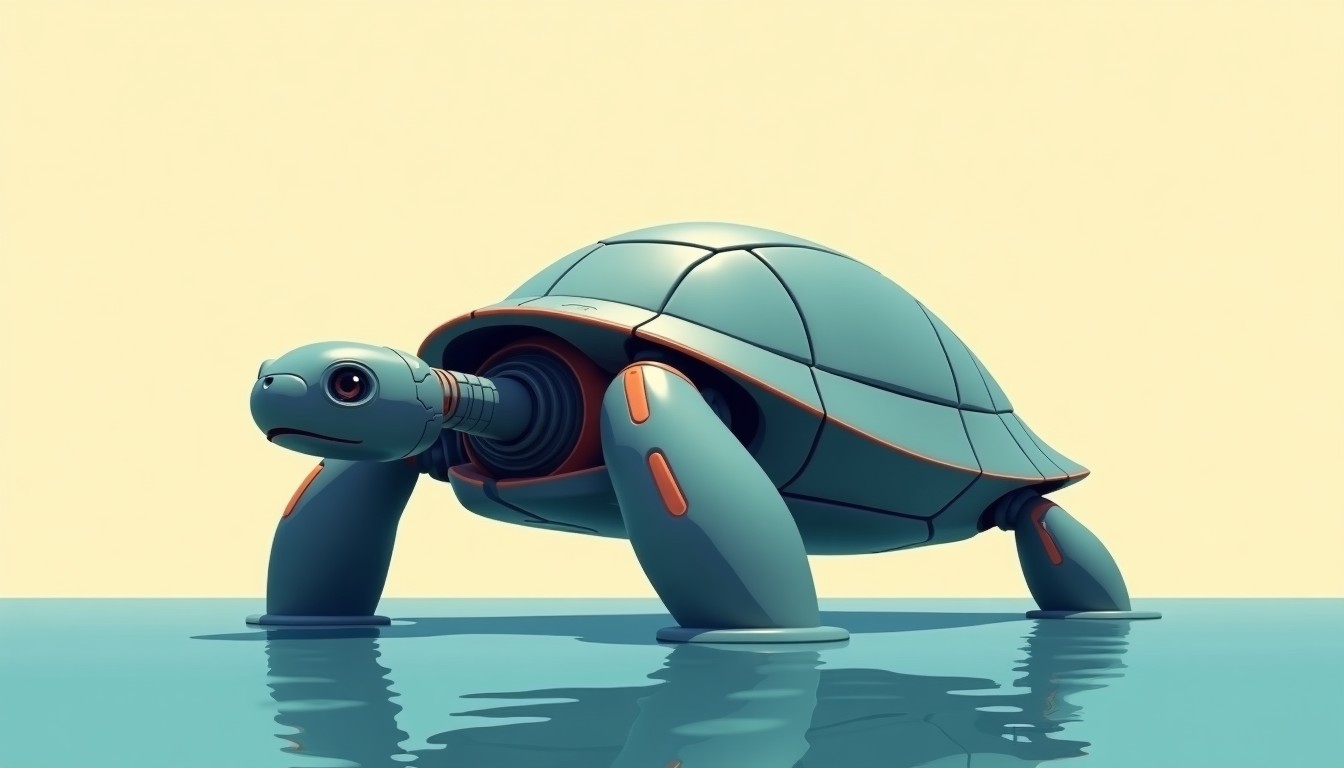
Evan Badz, 16, from Canada, did not wait for a university degree to start tackling environmental problems. While on a hike he encountered a caiman turtle and watched how it moved through water, controlling depth and navigating efficiently. The idea that followed was a robotic platform that mimics that motion but carries a scientific payload instead of armor.
The robot developed by Badz follows a predefined track and autonomously regulates its dive depth. Its core is a holographic camera that records the scattering of light from particles in the water. From the resulting interference pattern, an algorithm reconstructs a three-dimensional image of each particle and classifies it as micro-plastic or something else, eliminating the need to send samples to a lab or wait weeks for results.
In field tests the system reached 94% accuracy in identifying micro-plastic. This was not a synthetic benchmark nor a controlled lab demonstration; it was achieved in real water. The achievement earned a $50,000 scholarship at Regeneron ISEF, the prestigious international high-school science fair.
Today, micro-plastic monitoring requires collecting samples, transporting them to a laboratory, and processing them with expensive equipment—a process that consumes time and money and limits geographic coverage, especially in remote areas. A robot that identifies particles on site, in real time, changes the equation: fleets of such units could be deployed in rivers, lakes and coastlines to provide continuous maps of pollution without heavy logistics.
Badz has not yet published a peer-reviewed paper or released open-source code, and technical details about the architecture, holographic reconstruction resolution and sampling rate remain closely held. The next step will be to demonstrate that the accuracy holds under varying conditions—different turbidity, currents, temperatures and plastic types. For now, it remains an impressive prototype by a high-school student, not a system ready for mass deployment.